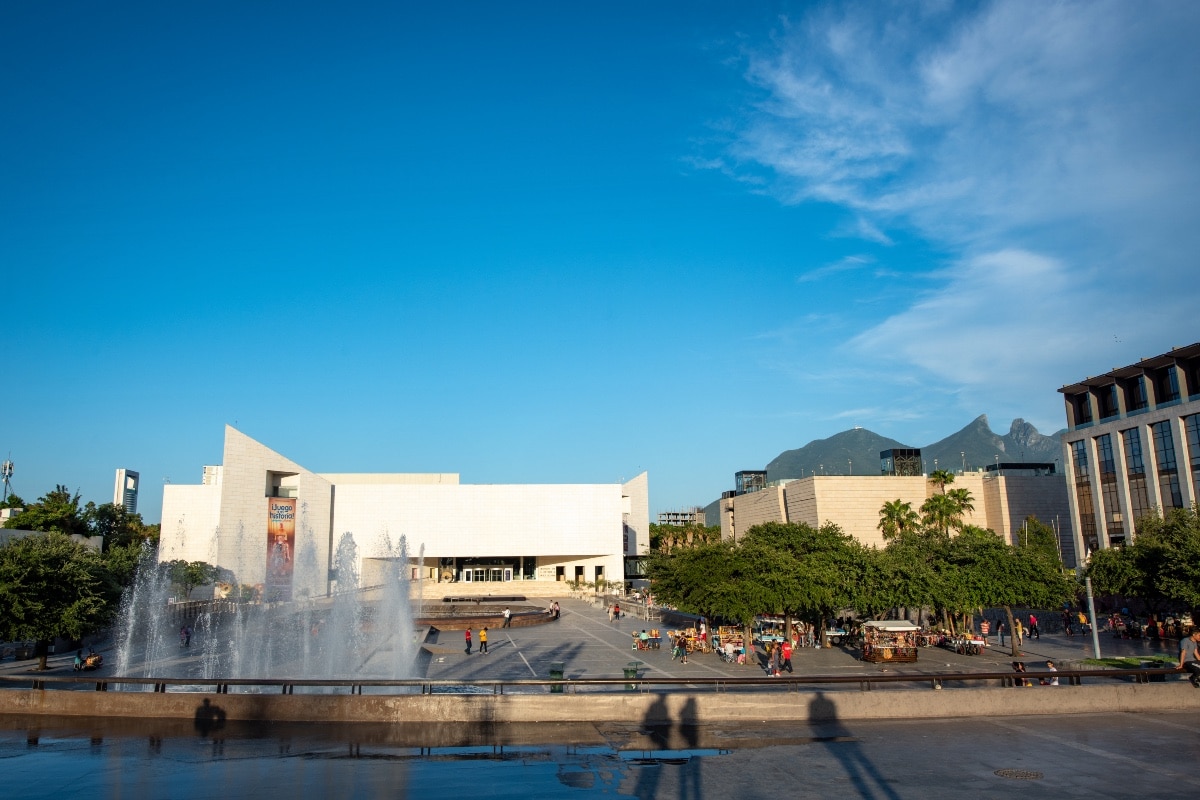
While some are always free, others are on Sundays and Wednesdays: come and see the best of local art without spending a penny!
Do you want to visit the city’s cultural sites without spending? Here we tell you which days the most important museums in Monterrey are free.
While some are always free, others are on Sundays and Wednesdays: come and see the best of local art without spending a penny!
Monterrey Museum of Contemporary Art.
The Macroplaza is also art, and the FRAME is a place that deserves a visit to discover its incredible collection. Its corridors have witnessed the presence of renowned local, national and foreign artists. Take a turn to have La Paloma, by visual artist Juan Soriano, greet you at the ticket.
Northeast Museum.
The MUNE is part of the Paseo Santa Lucía and the complex composed of the Palace Museum and the Museum of Mexican History (hence they are known as the 3 Museums). This collection seeks to preserve and expand the history of the states of Nuevo León, Coahuila, Tamaulipas and Texas. All sheltered by an impressive concrete, plaster and marble construction.
Visit this site from Wednesday to Saturday from 10:00 am to 6:00 pm, and Tuesday to Sunday from 10:00 am to 8:00 pm. Free tickets are only available for children under 18 years old, INAPAM and ICOM.
Museum of Mexican History.
This is another member of the three-museum complex and in its corridors you will find more than 1,200 pieces that narrate the history of our country from pre-Hispanic times to the twentieth century. The building covered by white stone deserves a special mention.
Hours are the same as those of the Museo del Noreste and, like this one, free admission is reserved for children under 18, INAPAM and ICOM.
Bishopric Museum.
Nuevo León is home to a rich and vast history. This museum is a celebration of the people who built the region. Some of its highlights are the views offered by its location and its amazing architecture.
Monterrey Metropolitan Museum.
This site has a lot of history. Its construction began in 1653 and ended in 1887. From then on, it had different functions until it became what it is now. It currently has more than 300 historical pieces.